Avoiding Over-Promised or Misleading Specifications When Purchasing a Planetary Ball Mill
Planetary ball mills are widely used in laboratories for materials research, environmental analysis, ceramics formulation, battery material development, and nano-scale grinding. However, the market is full of devices featuring exaggerated performance claims, unrealistic technical parameters, and misleading marketing descriptions. Poor purchasing decisions not only waste budget but also influence experimental accuracy and research repeatability.
This guide summarizes key verification points to help laboratories confidently select a planetary ball mill that performs exactly as promised.
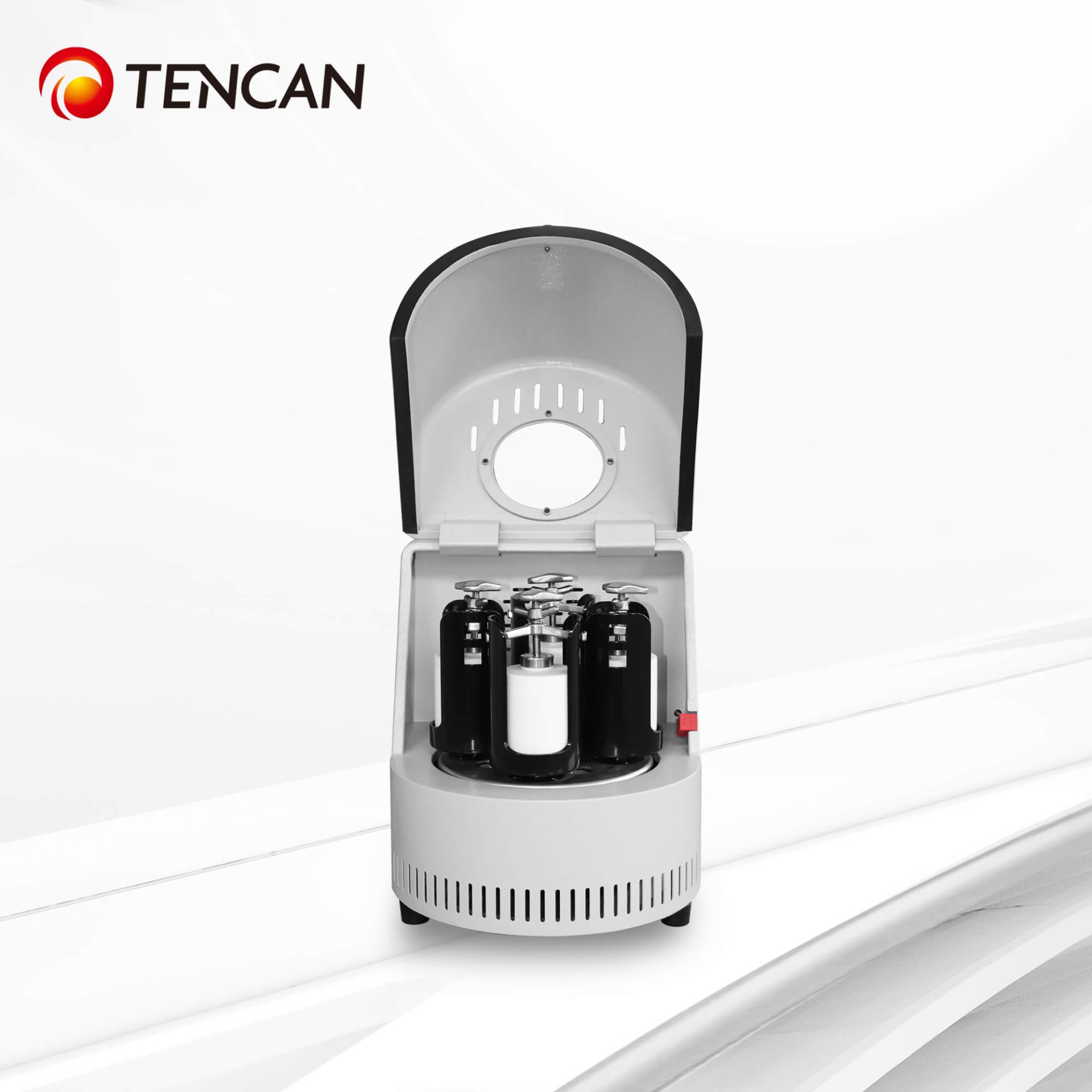
1. Do Not Judge Based Only on “Highest Speed” – Verify Load Speed and Speed Ratio
Manufacturers often promote impressive “maximum speed” numbers. Yet these values can refer only to no-load or theoretical speeds rather than real working performance.
When evaluating a planetary ball mill, confirm:
-
Actual speed under full jar loading
-
Whether the revolution/rotation speed ratio meets planetary motion requirements
-
Whether speed drops significantly when jars are filled
-
Whether the device maintains stable rotation during long runs
For example, a standard 1:2 speed ratio allows sufficient kinetic energy transfer, and stable full-load operation is far more important than extreme theoretical rpm figures.
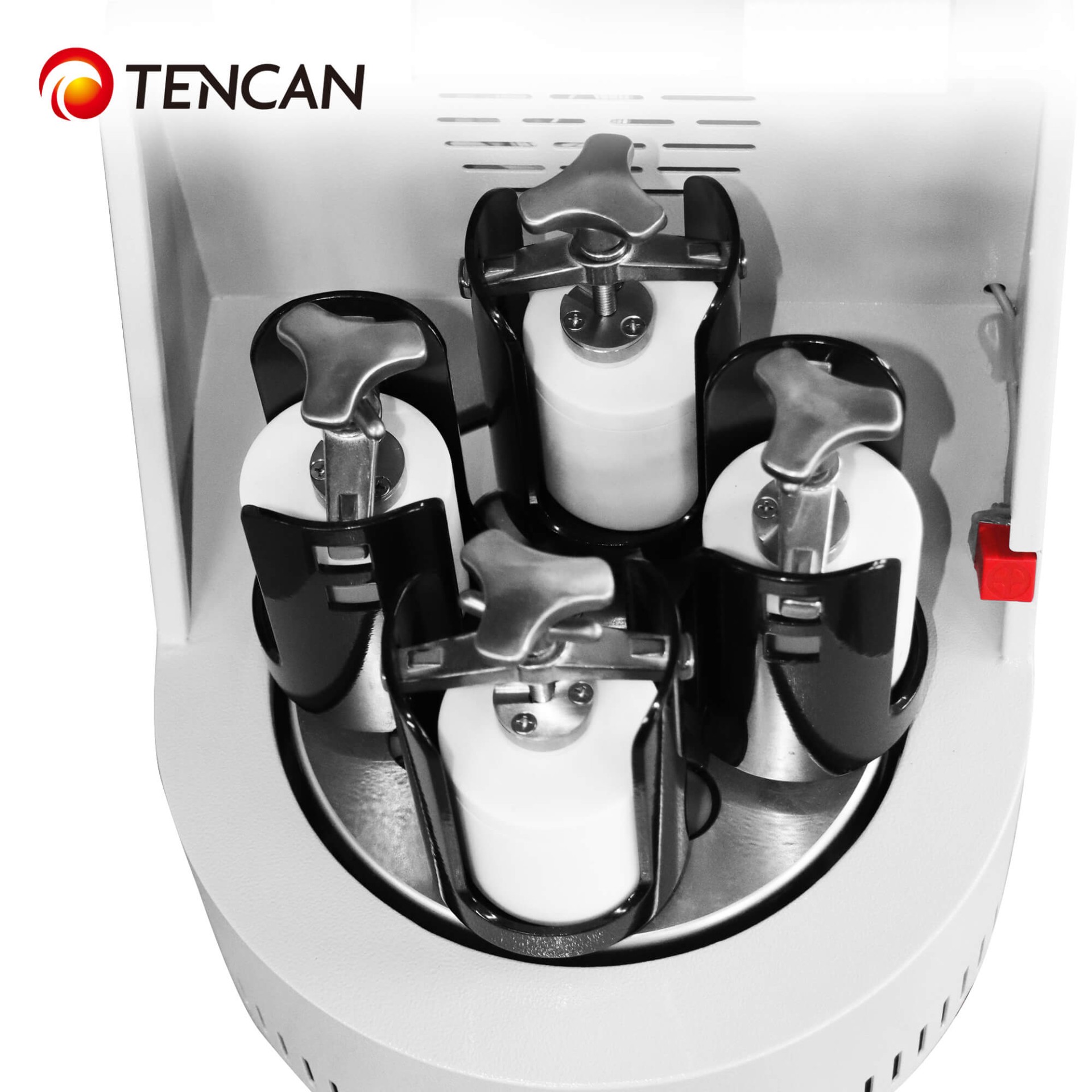
2. Beware of “0.1 μm Guaranteed Output” Claims
Many suppliers claim their mills can produce powder down to 0.1 μm—a statement that is technically possible but highly dependent on the material type, grinding media, grinding time, jar material, and ball-to-powder ratio.
Always check:
-
Whether the supplier states that “different materials achieve different fineness”
-
Whether they can provide real measurement data such as particle size distribution
-
Whether they can share typical grinding curves with actual laboratory results
A responsible manufacturer will never promise that everything can be milled to sub-micron sizes. Transparency on material limitations indicates credibility.
3. Confirm the Authenticity of Jar Materials and Their Wear Resistance
A trustworthy planetary ball mill supplier will clearly list all available jar materials and their suitable applications, such as:
-
Stainless steel
-
Zirconia
-
Corundum
-
Agate
-
Nylon
Selection must match the properties of the sample. If a manufacturer claims “one jar suits all materials,” it is a warning sign of unreliable product knowledge or misleading marketing.
4. Realistic Values for Noise, Stability, and Continuous Operation Time
Key performance parameters include:
-
Continuous operating time (normally 48–72 hours for standard lab use)
-
Noise level (typically 55–65 dB depending on jar material and rotational speed)
-
Vibration control design
-
Overload and overheating protection mechanisms
If a device is advertised as “running indefinitely without interruption,” or its noise level seems impossibly low, the specification may not be realistic.
5. Check Whether Weight and Dimensions Match the Claimed Energy Output
High-energy planetary motion requires solid mechanical structure.
If a product claims extremely high speed yet has an overly lightweight frame, the physics simply do not match.
Consider:
-
Device weight
-
Frame rigidity
-
Vibration damping mechanism
-
Jar clamping system strength
True high-energy machines always have substantial build quality.
6. Verify Claims About “Glove Box Compatibility” Carefully
A ball mill used inside a glove box must meet strict criteria:
-
Compact, miniaturized structure
-
Low vibration
-
Controlled heat generation
-
Glove-box-friendly dimensions
-
Stable electrical configuration
If a manufacturer claims that medium or large ball mills can be placed inside glove boxes, the statement should be questioned. Only specially designed compact models meet glove-box installation requirements.
7. Always Request Real Photos and Videos Instead of Only Rendered Images
To confirm authenticity, request:
-
Real equipment photographs
-
Grinding jar and clamp photos
-
Videos showing rotation and sound level
-
Demonstrations of speed adjustment
-
Photos of the control panel
A supplier unwilling to provide real images may not have the equipment physically in stock or may be exaggerating its performance.
8. Ask for At Least 2–3 Application Examples
A professional supplier will provide real application data, including:
-
Material type
-
Ball size configuration
-
Ball-to-powder ratio
-
Processing time
-
Final particle size distribution
If the supplier cannot offer any case studies, their expertise and experience in real laboratory applications may be limited.
9. Confirm All Accessories and Consumables Before Purchasing
Before finalizing purchase, verify:
-
Jar quantity and capacity
-
Jar material choices
-
Grinding balls included or optional
-
Replacement jar seals
-
Power supply compatibility
-
Speed controller specifications
Complete accessory transparency is essential for evaluating long-term operating cost and reliability.
10. Evaluate Technical Support and After-Sales Service
Planetary ball mills require correct installation, balanced loading, and optimized grinding parameters to achieve expected performance. Reliable suppliers always provide:
-
Technical guidance
-
Grinding process recommendations
-
Troubleshooting support
-
Spare parts supply
-
Warranty policy
Poor after-sales support is one of the strongest indicators of unreliable equipment.
Summary: Five Quick Ways to Identify Misleading Specifications
To avoid purchasing a poorly engineered or over-marketed planetary mill, apply these quick checks:
-
Does the real load speed match the claimed maximum speed?
-
Can the supplier provide actual particle size test data?
-
Does machine weight match its claimed performance energy?
-
Are there real usage cases, photos, and operation videos?
-
Are jar materials and application limits clearly described?